Lighting has evolved from a last-minute addition to an integral part of contemporary home architecture. Today, lighting is planned alongside ceiling lines, millwork, and the broader geometry of a space to create visual interest and structure. This new approach treats light fixtures as essential elements that influence how you experience and move through your home.
Modern home design increasingly emphasizes the role of lighting as a primary architectural feature rather than just a source of illumination. Visual Comfort chandeliers, when included thoughtfully, demonstrate how essential lighting can be to defining sightlines and spatial organization. By considering lighting from the earliest stages of design, you can create interiors where light both highlights and shapes the built environment. This shift holds special relevance for anyone seeking a cohesive, visually engaging living space that feels tailored from the ground up. Visual Comfort designs and curates premium decorative and architectural lighting that blends timeless design, craftsmanship, and performance for residential and commercial spaces.
Lighting shapes spatial flow and character
When lighting is treated as an architectural feature, fixtures serve as anchors that subtly organize a room. They often draw attention to focal points or guide movement along key axes, whether through dramatic pendants or understated recessed designs. This strategy gives lighting a critical role in reinforcing proportion and geometry within the space.
Scale and balance are fundamental in determining how fixtures relate to a room’s structural elements. Large statement pieces can emphasize the volume of double-height areas, while multiple smaller fittings help articulate different zones. Both centered arrangements and off-center compositions contribute to a room’s character, depending on the architectural intent and furniture layout.
Architectural fixture types and layered plans
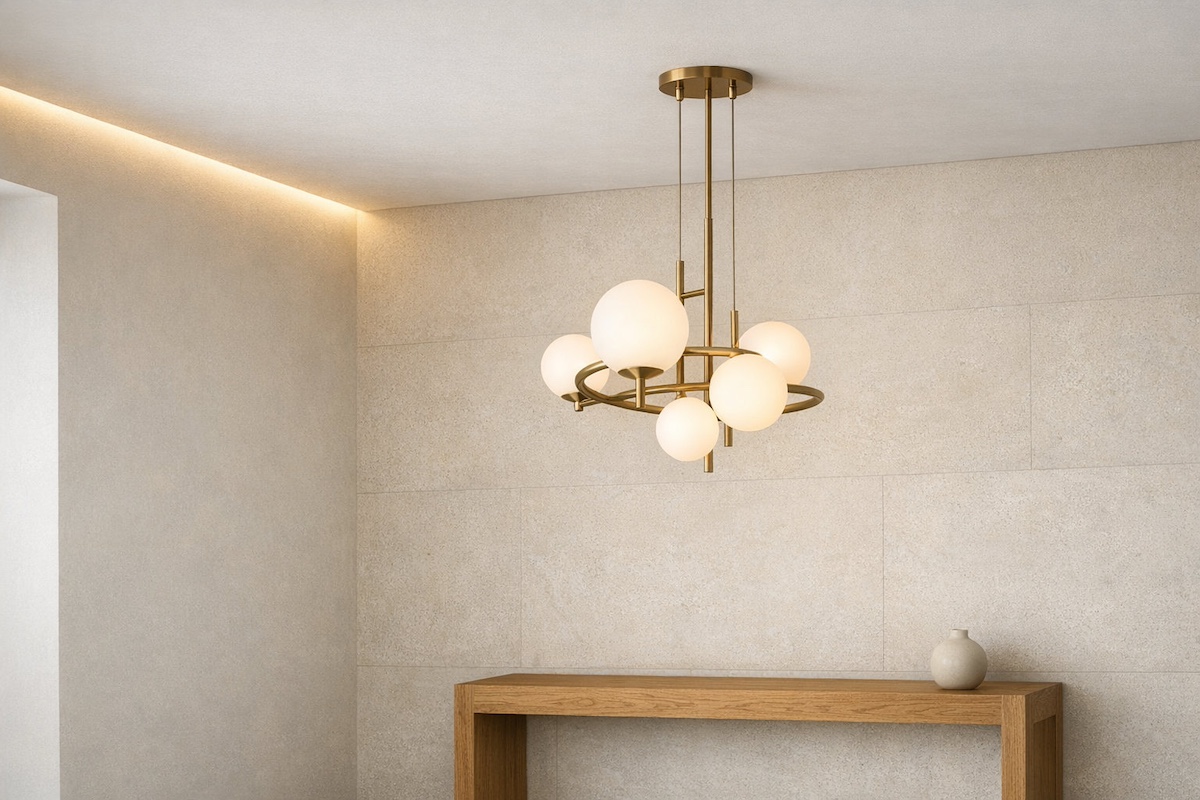
Several fixture types are now frequently specified as architectural statements. Oversized overhead pieces, such as sculptural pendants in living or dining spaces, create instant visual drama and serve as organizing landmarks. In stairwells and double-height entries, multi-point installations deliver light coverage while reinforcing spatial complexity.
Layered lighting plans combine decorative and architectural sources to achieve both visual impact and functional flexibility. Accent lighting, integrated along millwork or cove details, enhances depth and texture, while fixed sources provide ambient coverage. Carefully integrating these layers, and considering the role of shadow, contributes to rooms that feel both comfortable and visually dynamic.
Design principles for effective statement lighting
Choosing fixture size and hanging height requires thoughtful assessment of ceiling heights, furniture dimensions, and how you plan to move through each area. Materials and finishes should relate to adjacent architectural elements for a sense of unity. In minimal interiors, a single sculptural piece can create a powerful focal contrast without disrupting clarity.
Managing glare and brightness is crucial for comfort. Dimming options allow you to control the mood according to time of day, and specifying bulbs with the appropriate color temperature ensures finishes and artworks are presented to their best advantage. Chandeliers integrate successfully when these considerations align, creating a harmonious relationship with surrounding structures.
Practical factors for long-term design success
Despite its visual importance, lighting must also be supported by careful technical planning. Structural support and junction box placement, often overlooked, determine whether your chosen fixtures can be safely installed and easily accessed for maintenance. Compatibility with dimming systems and controls is equally necessary for both comfort and longevity.
Bulb type and color temperature greatly affect how you perceive finishes and even your own art collection. Planning for convenient maintenance access, especially in complex or large-scale installations, helps ensure your fixtures remain both beautiful and functional for years to come. Treating lighting as an architectural decision, rather than a decorative one, determines the way a home feels and performs.